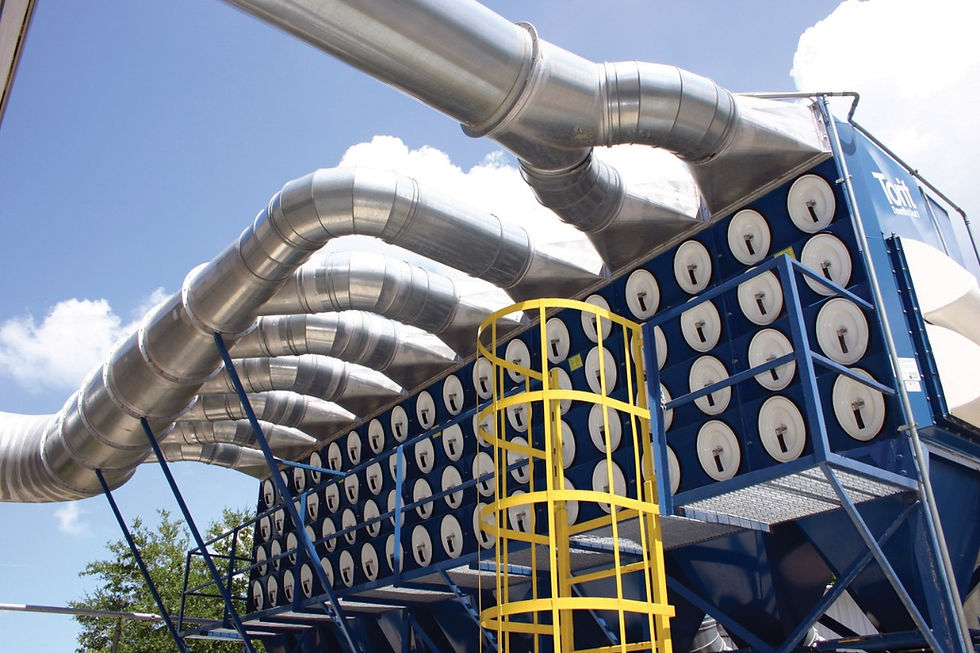
Heat Exchanger Winterization Strategies and Best Practices

Heat Exchanger Winterization: Engineering Principles, Design Strategies, and Industrial Best Practices
Introduction
Heat exchangers are integral components in countless industrial processes, including hydrocarbon processing, power generation, chemical manufacturing, food production, and HVAC applications—enabling efficient transfer of heat between two or more fluids. As essential as these devices are to process reliability, their operation in cold and variable climates introduces unique risks and challenges. Unprotected or inadequately winterized heat exchangers can experience operational disruptions, freeze-ups, costly repairs, efficiency losses, and catastrophic damage. Consequently, heat exchanger winterization, the systematic protection of exchangers and their ancillary systems against cold weather, emerges as a critical discipline within plant engineering and facility management.
This comprehensive report explores the multi-faceted practice of winterizing heat exchangers across industries, building on the latest technical standards, engineering calculations, and operational best practices. The report examines the core thermal and mechanical principles involved, elaborates on key protective strategies (including heat tracing, insulation, antifreeze methods, and system enclosures), and contrasts approaches for air-cooled versus water-side designs. It further analyzes how winterization strategies must adapt according to exchanger type, process fluid, and climate, placing special attention on practical applications and case studies from Kentucky and adjacent Southern U.S. states. The discussion is suitable for engineers, technical professionals, and plant operators seeking insight on ensuring resilience and efficiency in cold-weather operations.
Engineering Fundamentals of Heat Exchanger Winterization
The Imperative of Winterization
Industrial heat exchangers often process fluids that—under low temperature conditions—may solidify, freeze, or become highly viscous. When temperatures fall below the freezing point of water, or approach the pour/solidification point of hydrocarbons or specialty chemicals, a range of failures may ensue: performance degradation, ruptured tubes, lost containment, or even environmental incidents.
These risks are heightened for:
Exchangers located outdoors or in exposed, uninsulated areas;
Equipment handling fluids with high pour points, freezing points, or wax appearance temperatures; and
Systems subject to intermittent flow, standby operation, or periodic shutdowns.
Winterization thus requires a comprehensive approach—integrating material science, thermal engineering, and operational planning—to keep process streams above critical threshold temperatures and mitigate mechanical stresses associated with freeze-thaw cycles.
Heat Transfer and Freezing Risks
The predominant mechanism threatening heat exchanger operation in winter is heat loss to the environment. The driving force is the temperature difference between the process fluid and ambient air, compounded by wind chill, precipitation, and humidity levels. As external temperatures drop, heat is steadily conducted out of process streams through exchanger walls and uninsulated surfaces. If left unaddressed, the result may be freezing fouling (solidification of process fluids onto heat transfer surfaces) or formation of ice crystals within tubes, leading to dangerous overpressurization and tube rupture.
For design and analysis purposes, engineers employ the following principles:
The overall heat loss rate can be calculated using the formula: q = U × A × ΔT, where U is the overall heat transfer coefficient (W/m²·K), A is the surface area, and ΔT is the temperature gradient between the process fluid and ambient conditions.
The required heat input for winterization systems (e.g., heat tracing) must at a minimum offset this calculated heat loss to sustain the process fluid temperature above its critical lower limit.
Wind effects, insulation quality (R-Value), and transient start-up/shutdown dynamics must all be considered in detailed systems engineering.
Careful heat loss analyses, referencing both U-values and local meteorological data (including historical lows for regions like Kentucky), are central to robust winterization system design.
Thermal Analysis and Heat Loss Calculation Methods
Core Calculation Approaches
Accurate heat loss estimation is foundational for sizing winterization measures—be it selecting the wattage for electrical heat tracing, determining the required thickness of insulation, or specifying process bypass flows. Calculation typically involves:
Transmission Losses: Quantifies heat loss by direct conduction through exchanger cases, piping, and insulation. Heat Loss (W) = Surface Area (m²) × U-value (W/m²·K) × Temperature Difference (K).
Convective and Radiative Losses: Assess additional losses to the environment, which may rise significantly in exposed areas with high wind (wind chill factor).
Ventilation/Infiltration Losses: Particularly important for enclosures—accounts for heat loss due to air exchange.
Thermal Bridging: Corrections for places where conductive elements bypass the main insulation layer.
Detailed design also involves accounting for cold spots, irregular geometries, and pipe supports, employing either hand calculations (using catalog tables for U-values and R-values) or advanced simulation tools.
Practical Case Calculation Example
As an illustration, consider a shell-and-tube exchanger in Kentucky, exposed to a -10°C external temperature. If the process side must be held above the 0°C freezing point, and the surface area subject to loss is 20 m² with insulation
yielding a U-value of 0.3 W/m²·K:
Heat loss per hour = 20 × 0.3 × (0 – (-10)) = 20 × 0.3 × 10 = 60 W.
This most basic value must be multiplied by factors for wind, safety margins, and process control response, guiding selection of heating system capacity and insulation augmentation.
Importance for Region-Specific Design
For Kentucky and the Southern U.S., climate statistics reveal significant winter lows (sometimes well below freezing, though less extreme than the northern Midwest), with sporadic cold waves, high humidity, and dynamic wind conditions. The design minimum ambient temperature for winterization is typically set based on the lowest recorded temperatures, with safety factors to account for abnormal cold spells.
Winterization System Design Considerations for Heat Exchangers
Stepwise Design Process
Winterization of heat exchangers, especially in oil & gas, chemical, and energy sectors, generally follows a systematic, data-driven process:
Data Collection: Key documents include process flow diagrams (PFDs), equipment datasheets, piping & instrumentation diagrams (P&IDs), local climate data, and material specifications.
Vulnerability Assessment: Determining which equipment, process lines, and instruments are at risk, focusing particularly on those containing fluids with pour points or freezing points above projected ambient temperatures.
System Sizing: Apply calculation methods described in the prior section, integrating thermal resistances of insulation, anticipated heat tracing wattages, and required enclosure temperatures.
Selection of Protective Measures: Evaluate the feasibility and cost-effectiveness of strategies such as insulation, heat tracing, antifreeze injection, or housing/enclosure installation.
Control and Monitoring Specification: Automation of temperature control through thermostats, RTDs, and centralized monitoring systems ensures that winterization measures activate only when needed.
Documentation and Maintenance Planning: Detailed as-built plans, preventive maintenance schedules, and system testing protocols are developed.
Application and Extent of Winterization
Not all exchangers require uniform winterization. Decisions depend on:
Whether the line/equipment is “always on-stream” or subject to periods of no flow;
Fluid characteristics (e.g., water, hydrocarbon, chemically aggressive media);
System criticality (e.g., safety-critical service, continuous operation requirements);
Accessibility for manual interventions during freeze events.
For water and steam condensate piping, utility lines are typically insulated and traced if above the freeze line, with main lines buried when practical. Critical bypasses, startup, relief, and standby lines often require tracer application even if not continually in service.
Heat Tracing Techniques and Implementation
Heat Tracing: Technologies and Purposes
Heat tracing is the application of an external heat source—commonly in the form of electrical heating cables or fluid-filled lines—along equipment, piping, or exchanger surfaces to offset heat loss and prevent freezing or solidification.
Major Types of Heat Tracing
Electrical Heat Tracing Utilizes electric resistance cables, which may be self-regulating (adjusting output with temperature), power-limiting, parallel constant-watt, or series resistance.
Advantages: Precise temperature control, flexible application, ease of maintenance.
Limitations: Power supply constraints in remote areas, risk of hot spots if poorly regulated.
Steam Heat Tracing Deploys steam lines (tubes or jackets) running parallel to process equipment.
Advantages: Readily available heat in plants using steam, robust for high-temperature maintenance.
Limitations: Water management, potential for leaks, labor-intensive installation.
Hot Oil/Water Tracing Uses circulating hot fluids where high accuracy is not required, or where steam/electricity is not available.
Combination Systems Some industrial applications may use both steam and electric tracing, depending on the location and operational requirements.
Heat Trace Design Considerations
Developing a successful heat tracing scheme demands:
Careful matching of heat trace capacity to calculated heat loss, including insulation efficiency, pipe size, wind exposure, and location.
Sensor placement—RTDs or thermocouples—to ensure accurate feedback for automated temperature control.
Selection of correct trace cable/wattage/jacket material per pipe or vessel specification and chemical environment.
System modularity to ease installation and maintenance, especially on long or complex piping runs.
Emerging smart control and monitoring systems can centralize diagnostics, optimize energy use, and provide alarms in the event of failures—improving both energy efficiency and reliability.
Insulation Strategies and Material Selection
The Role of Insulation
Insulation remains the first line of defense in any winterization plan. By minimizing heat transfer to the environment, insulation reduces the demand on supplemental heating systems, lowers energy consumption, and extends the operational range of exchangers in cold weather.
Material Selection
Key insulation materials for industrial heat exchangers/piping include:
Mineral Wool (Rockwool): High thermal resistance, widely available, non-combustible. Used extensively on steam lines and process equipment.
Glass Fiber (Fiberglass): Lightweight, cost-effective, stable up to moderate temperatures.
Polyurethane Foam: Superior R-values in thin profiles, popular for retrofit and constrained spaces.
Aerogel-Based Blankets: For the highest insulation efficiency in premium applications.
For critical heat exchangers, insulation jackets (removable, custom-fitted wraps) offer the flexibility for inspection and maintenance while maintaining superior protection.
Insulation Thickness and Performance
Proper specification of insulation thickness is vital—under-insulated systems lose heat rapidly, while over-insulated lines may trap unwanted process heat. The optimal thickness is determined by:
Surface area and material of exchanger;
U-value (thermal conductivity) of the insulation;
Required surface and process temperature;
Local wind and weather exposure.
In high-moisture/humid climates like the Southern U.S., vapor barriers are included to prevent condensation and subsequent insulation degradation.
Enclosure and Protective Housing Designs
Purpose and Design of Enclosures
Enclosing entire heat exchanger assemblies, especially those with complex geometries or critical process fluids, provides robust protection against cold air, wind, and precipitation. Well-designed enclosures:
Reduce convective heat loss and shield against wind chill.
Allow for the installation of space heaters, recirculating fans, or localized heating elements.
Permit access for monitoring, maintenance, and operation during cold spells.
Construction utilizes insulated panels, weatherproof doors, and may integrate thermally isolated support structures. In the Southern U.S., lighter-weight or modular enclosures are preferred, but must still accommodate rare extreme cold events.
Housing for Air-Cooled Exchangers
For air-cooled heat exchangers specifically, the use of winterization cabins, wind walls, or hot air recirculation ducts with adjustable louvers is increasingly common. Such systems can direct process or ambient air over tube bundles to prevent stratification and freezing, especially during reduced plant loads or turndown conditions.
Anti-Freeze Agents and Chemical Pour Point Depression
Fundamentals of Pour Point Depressants
For systems utilizing process fluids susceptible to freezing or solidification (paraffins, heavy oils, aqueous solutions), chemical additives known as pour point depressants or antifreeze agents can be deployed. These additives lower the temperature at which fluids transition from liquid to semi-solid, mitigating the risk of blockages and losses.
Types and Mechanisms
For Hydrocarbon Fluids: Polymeric and copolymer pour point depressants interact with wax crystals, inhibiting aggregation and maintaining flow at lower temperatures.
For Water-Based Systems: Glycol solutions (ethylene/propylene glycol blends), or specialized inhibitors for specific chemicals, are common.
Best Practices and Cautions
Selection and dosage of antifreeze agents must consider:
Fluid chemistry and compatibility: Mismatch can cause adverse reactions, corrosion, or loss of process properties.
Environmental regulations: Especially when using bio-based or “green” additives.
Maintenance of concentration levels, monitored regularly to avoid dilution or efficacy loss.
Pour point depression is typically combined with other winterization tactics for high-reliability applications.
Winterization Practices for Air-Cooled Heat Exchangers
Unique Risks
Air-cooled exchangers, ubiquitous in gas/oil plants, power stations, and HVAC applications in the U.S. South, are exposed to direct wind and temperature fluctuations. Issues that arise without winterization include:
Tube-side freezing due to external subzero air contact;
Hydrate formation if moist gas streams are cooled below dew point;
Uneven temperature distribution leading to hot/cold spots and stress fractures.
Protective Strategies
Key approaches include:
Hot Air Recirculation: Warm air is redirected from outlet plenums back to the exchanger’s air inlet, raising local temperature and reducing freezing risk.
Louvered Wind Walls and Adjustable Louvers: Control the extent of cooling and shield bundles from wind exposure. API 661 standards specify requirements for such provisions in cold climates.
Glycol Coils or Electric Heaters: Embedded near inlets or in emergency loops to provide surge protection against sudden cold snaps.
Multi-Fan Control and Turndown Protocols: Variable frequency drives (VFDs) and staged fan operation reduce overcooling during plant turndown or periods of minimal process flow.
Louvers and air bypasses are often automated, responding dynamically to temperature, wind speed, and process load.
Winterization Practices for Water-Side Heat Exchangers
Water-Side Vulnerabilities
Shell-and-tube, plate-and-frame, and other water-side exchangers are susceptible to rapid freezing when exposed to subzero air, particularly if process flow ceases. Risks are most acute for:
Exchangers with horizontal/low-slope piping geometries, which may accumulate standing water;
Units subject to intermittent operation, or not immediately drained upon shutdown;
Fluid systems that are not fully protected with antifreeze solutions or heat tracing.
Protective Measures
Fully Insulated Casings: Limiting conductive losses.
Heat Tracing of Shell/Tubes and Ancillary Lines: Electric or steam tracing as previously detailed.
Draining and Sloping: Ensuring all lines are self-draining or positively pitched to avoid pooling.
Chemical Antifreeze Injection: When water-based fluids cannot be replaced or avoided.
Enclosure in Heated Buildings: For critical equipment, placing exchangers indoors or within heated shelters is an effective (if capital-intensive) approach.
Automated shutdown protocols should ensure complete draining or recirculation is initiated during plant outages or anticipated cold periods.
Tailoring Winterization Strategies to Climate: Kentucky and the Southern U.S.
Climatic Context
Although the deep South is rarely subjected to the extreme, prolonged subzero temperatures seen further north, climate data shows that localized cold outbreaks, ice storms, and freezing rain events are recurrent across Kentucky, Tennessee, northern Alabama, and the Appalachian highlands. These sporadic cold spells can have severe, though short-lived, impacts on unprotected equipment.
Principles in Regional Adaptation
Adjusting Design Minimums: Use of regional weather statistics to determine “design winter temperature.” For Kentucky, this may range from -5°C to -15°C depending on location and site elevation.
Seasonal/Intermittent Operation: Many Southern plants operate at high loads through winter. However, during rare freeze events, hot standby protocols and rapid winterization deployment are crucial.
Balance of Investment: For less frequent cold risks, solutions that are modular, removable, or “on-demand” may provide a better ROI than continuous winterization infrastructure.
Leveraging Local Assistance Programs: Initiatives such as the Weatherization Assistance Program in Kentucky play a role in adapting and funding appropriate strategies for residence and light industry, emphasizing insulation, energy efficiency, and targeted heater upgrades.
Cold Weather Operational Strategies: Startup, Shutdown, and Maintenance
Start-Up Protocols
When restarting heat exchangers in cold conditions, critical considerations are:
Viscosity Management: Fluids cold-soaked to ambient may have high viscosities, leading to inadequate turbulent flow (especially for thermal oils). Heating should be ramped up gradually to avoid thermal shock, using controller “soft start” features if available.
Pump Recirculation and Bypass: Maintain circulation to prevent localized freezing until stable temperature is reached.
Monitoring Sensors: Ensure temperature and flow sensors are online and calibrated before full load engagement.
Shutdown and Standby
Shutdown events can be hazardous without proper precautions:
Cool-Down Period: Continue fluid circulation until both heater and fluid are below safe shutdown thresholds.
Draining or Antifreeze Injection: Drain lines entirely if out of service for extended periods, or increase antifreeze concentration.
Lock-Out/Tag-Out: Ensure all personnel are aware of freeze risk during maintenance intervention.
Preventive Maintenance
Routine inspection, cleaning, and functional tests are essential for reliable winterization:
Scheduled reviews of heat trace wiring, insulation integrity, and heater operation;
Detection of leaks or failures in traced circuits;
Testing antifreeze concentration in fluid reservoirs;
Cleaning and draining as part of both regular maintenance and pre-winter preparation.
Case Study: Kentucky Industrial Winterization Examples
Energy Sector (Power Generation & Utilities)
Kentucky’s coal-fired and combined cycle power plants employ extensive winterization for critical heat exchangers, including:
Full insulation and electric heat trace on main condenser water lines, especially at plant peripheries;
Enclosures over instrument air exchangers;
Glycol antifreeze in cooling tower side loops during extreme cold.
Programs by the Kentucky Power Foundation ($1 million grant to weatherization efforts) are enhancing regional resilience—demonstrating the importance of coordinated investments pairing home retrofits, industrial upgrades, and public-private partnerships for winterization success.
Chemical and Food Processing Plants
Facilities in the Louisville region report:
Hot standby recirculation pumps installed for all outdoor exchangers handling water or aqueous solutions;
Steam tracing specified for all lines carrying caustic, amines, or viscous food-grade fluids with pour points above 0°C;
Modular insulation systems—removable for cleaning but robust against periodic freeze events.
Case Study: Southern U.S. Industrial Winterization Examples
In Houston, Atlanta, and similar climates:
Plants leverage a blend of temporary wind walls, modular electrical heat tracing, and chemical inhibitors for glycol and hydrocarbon lines.
Air-cooled exchangers in oil & gas midstream applications are equipped with automated louver systems, allowing for rapid deployment of hot air recirculation only during specific cold spells.
Process side temperature setpoints are raised by 3–5°C above standard operational levels during forecast freezes.
Industry Standards and Best Practice Guidelines
API 661 (Air-Cooled Exchangers): Provides recommendations for winterization, including Annex C for high-pour-point fluids, specification of temperature safety margins, and appropriate louver/recirculation designs.
ASHRAE 90.1: Guidelines for HVAC system efficiency and winter operation.
OSHA, ASTM, and IEEE standards: Cover the testing, operational safety, and installation norms for heat tracing, insulation, and enclosure systems.
Manufacturer Technical Guides: OEMs like Thermon, Altex, and Hoffman publish detailed system selection, design, and installation manuals—often tailored to climate zone and industry.
Monitoring, Control Systems, and Instrumentation
A well-executed winterization scheme is only as effective as its control and monitoring infrastructure:
Electronic Thermostats and RTDs: Provide real-time feedback for heat tracing circuits.
Central Supervisory Control: Modern systems allow remote status checks, alarms, and programmatic setpoint adjustment—improving energy efficiency and reducing unnecessary heater runtime.
Condition-Based Maintenance: Sensors tied into maintenance management software trigger work orders proactively if anomalies (temperature excursions, flow interruptions) are detected, minimizing freeze-up risk.
Material Choices for Low-Temperature Service
Material selection for both heat exchanger bodies and ancillary winterization systems is critical:
Stainless Steels (304/316): Preferred for low-temperature and cryogenic service due to high toughness at subzero temperatures, compared to mild carbon steels which become brittle below -20°F.
Copper and Cupronickel: Excellent for ultra-low temperature applications (down to -450°F), but not suitable with ammonia or highly contaminated streams.
Aluminum: Lightweight, high thermal conductivity, but may require coatings for corrosion resistance.
Polymer and Composite Insulation: For enclosure applications, providing good thermal performance and resilience in humid or variable climates.
All material choices should factor in compatibility with process fluids, susceptibility to freeze-thaw fatigue, corrosion resistance, and long-term maintenance requirements.
Economic and Energy Efficiency Analysis
Cost Considerations
Upfront Investment: Winterization systems may increase capital costs, but this is offset by avoided downtime, freeze damage, and loss of product.
Operational Costs: Electric trace heating can be expensive if used unnecessarily; thus, optimizing control systems and maximizing insulation performance is vital.
Return on Investment (ROI): Systems in regions with rare severe cold (Southern U.S.) must balance the likelihood of cold events with protected asset value. Where critical process uptime is at stake, even “overdesign” can be justified.
Energy Efficiency
Insulation first: Maximizing insulation is universally recognized as the most cost-effective first measure—reducing ongoing heating demand.
Automated Controls: On/off cycling, demand-based activation, and zoning cut unnecessary energy expenditure, especially important in facilities covered by stringent energy standards (such as ASHRAE 90.1).
Modularity and Targeted Deployment: For infrequent cold spells, modular or mobile winterization solutions provide savings compared to full permanent installations.
Key OEM Solutions and Technology Providers
Thermal Equipment Sales offers a wide array of OEM Parts to aid in your winterization.
OEMs increasingly incorporate regional feedback, smart technologies, and modular solutions to address the dynamic climate challenges of regions like Kentucky and the Southern U.S.
Summary Table: Winterization Strategies by Exchanger Type
Exchanger Type | Key Risks | Typical Winterization Measures | Adaptations for Kentucky/Southern U.S. |
Air-Cooled | Tube-side freezing, wind chill | Hot air recirculation, automated louvers, heating coils, insulation, windwalls | Modular/blockable louver systems, minimal standby |
Shell-and-Tube (Water) | Tube/shell freezing, ice plugs | Insulation, electric/steam heat trace, antifreeze injection, positive drainage design | Hot standby flows, glycol for intermittent lines |
Plate-and-Frame | Rapid freezing on shutdown | Insulated jackets, electric heat trace, full drainage, process bypass/recirculation | Manual drain/test protocols in less frequent cold |
Process Fluid (Viscous) | Solidification at low temp | Steam/electric tracing, pour point depressant injection, continuous monitoring | Additive injection lowers pour point as backup |
Instrument/Critical Lines | Local freezing, blockage | Mini-electrical heat tracing, insulated/trace tubing bundles, enclosure cabinets | Portable heat pads or heated enclosures |
These strategies are each elaborated in preceding sections; adaptation to the region focuses on balancing robustness with cost-efficiency, emphasizing modularity and seasonal activation.
Conclusion
Winterization of heat exchangers is a cornerstone of reliable, safe, and efficient plant operation in cold climates—an imperative not just for northern facilities, but also for Kentucky and the broader Southern U.S., where sporadic freeze events can be equally disruptive. The most effective programs integrate robust heat loss analysis, tailored insulation and heat tracing systems, process-specific antifreeze and pour point depression, and regionally adapted design and operational protocols. Advances in materials, control systems, monitoring instrumentation, and OEM technology continue to improve both performance and cost-effectiveness.
As climate variability increases and energy efficiency targets tighten, the best practice is a holistic, site-specific winterization plan, leveraging proactive maintenance, smart automation, and targeted investment to ensure process resiliency wherever cold may strike. For engineering professionals, ongoing vigilance, data-driven analysis, and incorporation of local lessons learned—such as those from weatherization programs across Kentucky—are key to enduring success.